September 2026
A guide to understanding tumour evolution through population genetics
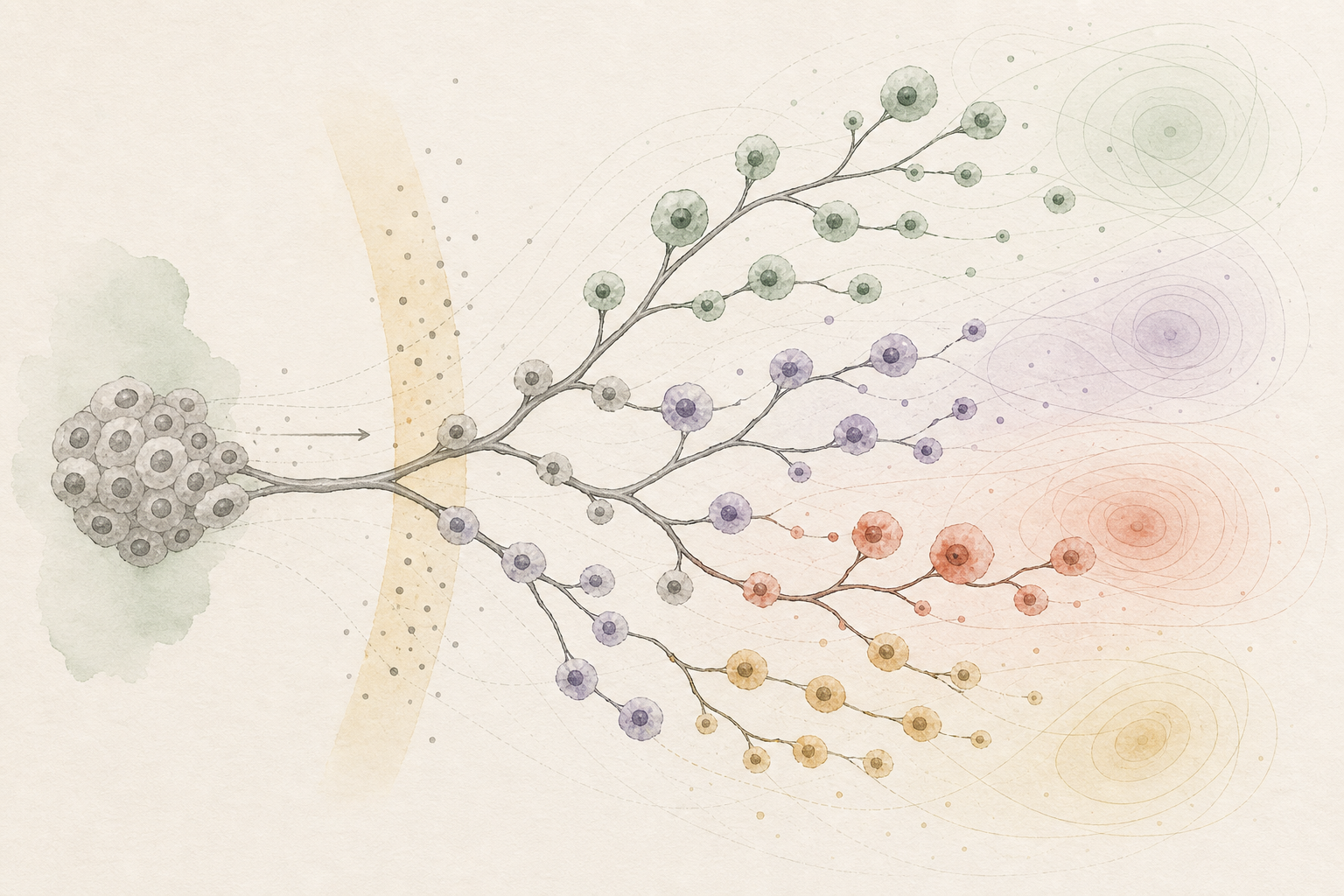
Our new review in Nature Reviews Cancer explains how population genetics helps us read the evolutionary history recorded in a tumour's genome.
Cancer Data Science Laboratory · University of Trieste
Cancer is not a static disease. Our laboratory studies how tumours develop, adapt and respond to treatment, creating new ways to interpret complex biomedical data.
COMPUTATIONAL ONCOLOGY
Methods designed around real biological and clinical problems.
INTERDISCIPLINARY BY DESIGN
Computer science, statistics, physics, biology and medicine.
OPEN RESEARCH
Reproducible software, data and collaborative science.
Our research is made possible by the generous support of several institutions.



September 2026
Our new review in Nature Reviews Cancer explains how population genetics helps us read the evolutionary history recorded in a tumour's genome.